Careers at CAISH

Operations and
Programme Analysis

Associate/Manager

Applications closed.

Location Cambridge, UK
Level Associate or Manager
Salary £40k–£65k by level
Applications Closed 19 July 2026

Summary

The Cambridge AI Safety Hub (CAISH) is a field-building organisation working to reduce catastrophic and existential risks from advanced AI. We help talented people understand AI safety, build relevant skills, and contribute to the field.

Our programmes involve a whole stack of activities, from applications and participant communications to travel, accommodation, venues, budgets, reimbursements, contracts, visitors, and contractors. You would keep those moving parts joined up, while improving recurring work through better processes, automations, LLM workflows, and clearer documentation.

The role has a second half. We select fewer than five per cent of MARS applicants from a field of roughly 1,700, we spend real money per participant, and we tell our funders that our programmes put people into serious AI safety work. At the moment we cannot demonstrate that as rigorously as we would like. You would build the systems that let us: designing what we measure and how, how we select and place participants, and how we report what came of it. Roughly a third of the role is this analytical work.

We expect to hire at Operations Manager level, but are also open to appointing an exceptional earlier-career candidate as Operations Associate. If we appoint at Associate level, we would adjust the initial scope of the role and provide more support as the person grows into it.

About CAISH

Cambridge is one of the world’s most intellectually vibrant cities. We want CAISH to be a place where talented students, researchers, and professionals can understand AI safety, build relevant skills, and find collaborators.

Our student programmes help Cambridge University students enter the field through the Alignment Fellowship, the Alignment Desk, regular student socials, and a student committee that helps maintain and grow the community.

Our upskilling programmes support people further along. MARS is a part-time research training programme, and the Hardware Assurance Programme is a week-long bootcamp for people moving into AI verification and assurance.

The Role

In practice, you would keep track of operational detail, make sure people have what they need, improve recurring processes, and spot what will break before it does.

Programme measurement and evaluation

Own how CAISH knows whether its programmes work. Design and run the monitoring and evaluation framework across MARS, the Hardware Assurance Programme and the student programmes: decide what is measured at intake, exit and follow-up, set the analysis plan before the data is collected rather than after, run the analysis, and write the impact assessment our funders read. Design and analyse our applications, end-of-sprint surveys, mentor surveys and alumni tracking as measurement instruments rather than as forms. Own the selection and placement machinery: impressiveness scoring, calibration and agreement between reviewers and LLM judges, rank aggregation, and the stream allocation that matches mentees to mentors.

Programme and financial analysis

Build and hold the models the co-directors and our funders make decisions from: cost per participant by programme, the marginal cost of an additional cohort or sprint week, unit economics, and budget scenarios for funding submissions. Turn programme-level spend tracking into analysis rather than bookkeeping.

Programme logistics

Own logistics across MARS, the Hardware Assurance Programme, and student programmes: participant onboarding, application tracking, visa guidance, catering, venue booking, accommodation, and day-to-day coordination.

Systems and tooling

Keep Airtable, shared Claude Team, Google Workspace, forms, automations, records, and internal trackers clear, reliable, and easier for the team to use.

Finance and contracting support

Work alongside Adam, the Finance Director of Meridian Cambridge, on contractor agreements, stipends, bursaries, expenses, payments, and clean programme-level spend tracking. For more complex finance, legal, HR, or compliance questions, you would work with Meridian and other specialist advisers rather than needing to be the expert yourself.

Hiring processes

Coordinate recruitment end to end: applicant tracking, scheduling, interviews, candidate communication, and keeping each process smooth from application through offer.

How We Work

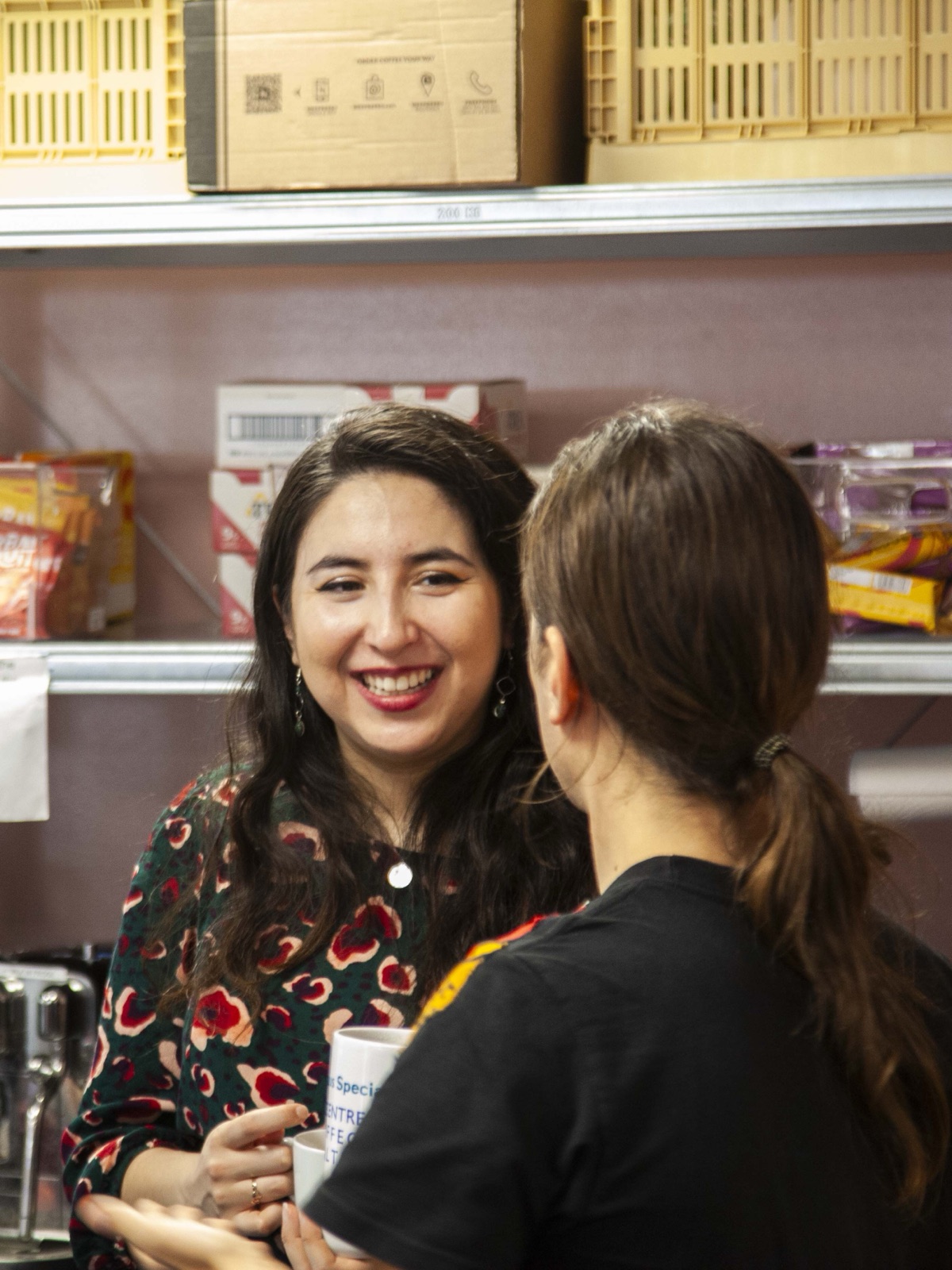
Two people chatting over tea in the Meridian office kitchen

CAISH runs on an ownership model. The point is to let each person operate with enough context to move quickly, without constantly pulling everyone else into decisions in ways that slow the work down.

As our first operations hire, you would sit within that model too. You would own operations. Some of that is practical: making Airtable, email, trackers, payments, and recurring logistics work reliably. Some of it is strategic: deciding what we measure, finding the bottlenecks that stop us from scaling, choosing where to automate, and building the operating rhythms that let the team make better decisions.

There will be grunt work. There will also be scope to build something much better than what exists now. Once you have enough context, we would want you to spend part of each week improving and automating our systems, while still getting the object-level logistics done.

Levels

Operations Manager

At Manager level, we would expect you to take ownership of CAISH’s day-to-day operations and programme logistics fairly quickly, to own the measurement and evaluation framework outright, and to make the operational side of our work clearer, more reliable, and easier for the rest of the team to build on.

Operations Associate

At Associate level, we would be hiring more for potential, starting with a narrower set of responsibilities, more structured support, and clearer priorities. The first goal would be for you to become a reliable owner of defined processes and parts of programme logistics, and to build the first version of our measurement systems with the co-directors, then grow into broader operational and analytical ownership over time.

How the role could grow

The natural next step for an Associate is growing into an Operations Manager role. From there, someone especially strong at systems, delivery, and team management could grow towards Head of Operations. Someone especially strong at coordination, prioritisation, and helping the co-directors make better use of their time could grow towards a Chief of Staff role.

Who We’re Looking For

You think quantitatively about whether things worked.

You can be handed a programme and a vague claim about its impact and work out what would have to be measured, and when, to test it. You know the difference between an output and an outcome, and why the thing that is easy to count is usually not the thing that matters.

You build systems other people can run.

Not just spreadsheets that work while you are holding them. Documented, handed-over, still correct in six months.

You clarify messy work.

When something is handed to you, it gets clearer. You work out what needs to happen, what information is missing, who needs to be involved, and what will slip if nobody is watching.

Your organisation is visible to others.

Your trackers, checklists, calendars, and follow-ups mean the team knows what needs to happen, who owns it, and when it is due.

You are conscientious.

You notice how an email will land, what a form feels like to fill in, and where a participant is likely to get confused or frustrated.

You are comfortable in a startup environment.

You are proactive about improvements, stay calm when the day does not go to plan, and can push back when something does not make sense.

You want to get better at operations.

You want to build judgement, learn new tools, and turn recurring work into systems. You do not need to be an AI safety expert, but you should be motivated by the mission.

What we need you to bring

  • A degree or equivalent qualification in economics, statistics, or another quantitative social science, or equivalent research training.
  • Demonstrated ability to design and analyse survey instruments, and to work out what should be measured in order to answer a question someone actually has.
  • Working knowledge of causal inference and programme evaluation, including the problem of inferring long-run outcomes from the short-run proxies you can actually observe.
  • The ability to build and interrogate quantitative models in R, Python or an equivalent environment.
  • Demonstrated ability to design and operate substantial administrative systems.
  • Written communication strong enough to make quantitative findings usable by people who are not quantitative.
  • You do not need to be an AI safety expert, but you should be motivated by the mission.

About the Role

Hours

Full-time, 40 hours a week, with flexible working hours and unlimited PTO.

Location

Cambridge, UK. We would want you based in Cambridge and able to work from our office regularly. This is not a fully remote role, and you should expect to be present for major CAISH events.

Travel

You should be comfortable travelling occasionally for conferences, retreats, and other field-building opportunities, likely 2 to 4 times per year.

Development

As our first dedicated operations hire, you would have room to shape how we run and to take on more responsibility and compensation over time.

What We Offer

A team member working at a desk in the Meridian office
Operations Associate £40,000–£50,000 roughly $53,000–$66,500
Operations Manager £55,000–£65,000 roughly $73,000–$86,500
  • Pension A workplace pension with a 4% employer contribution.
  • Relocation and visas A relocation stipend to help you move to Cambridge, plus visa sponsorship for non-UK residents.
  • Autonomy We want you to figure out how you work best, with room to make mistakes and do better next time, rather than being micromanaged. When we give feedback, we ask questions and try to understand the process rather than critique the end outcome.
  • Development Coaching, regular feedback, and investment in your professional growth.
  • Working setup Flexible hours, unlimited PTO, a tech stipend, a professional development stipend, and coworking space in central Cambridge.

Hiring Process

Dates after the application deadline are approximate.

  1. 19 July 2026, 23:59 AoE Initial application deadline
  2. 26 July 2026 Short async interview
  3. 9 August 2026 Paid take-home work trial
  4. 24 August 2026 Panel interview
  5. 31 August 2026 Final offer

Applications Closed

Applications closed on 19 July 2026, 23:59 AoE. If you have questions about the role, email hiring@caish.org. See all roles.